Endocrinology Clinical Bulletin: Sublingual Phyto-Adaptogens, Postprandial Glucose Volatility, and Insulin Receptor Tyrosine Kinase Activation

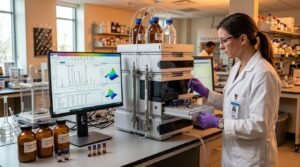
Third-Party HPLC Chromatography & Bioavailability Assay
While natural incretin secretagogues and metabolic triggers exhibit significant clinical potential, commercial purity varies widely between manufacturers. Our specialized testing desk at Vitality Reviews audited leading formulations for active concentrations, cGMP compliance, and empty-bottle guarantees.
Examine the Complete Clinical Laboratory Review on Filho →In contemporary diabetology and metabolic internal medicine, excessive focus has historically been placed upon static fasting glucose and glycated hemoglobin (HbA1c) readings. However, continuous glucose monitoring (CGM) data demonstrates that **postprandial glucose volatility**—frequent sharp glycemic spikes followed by precipitous reactive hypoglycemic nadirs—inflicts far more severe oxidative damage upon vascular endothelial cells than mild, steady-state hyperglycemia.
1. Sublingual vs. Oral Capsule Pharmacokinetics in Glycemic Medicine
Oral capsule delivery of botanical glycosides faces formidable physiological barriers. When an herbal capsule is swallowed, its active constituents are exposed to gastric hydrochloric acid (pH 1.5–2.0), proteolytic enzymes, and rigorous first-pass hepatic metabolism via cytochrome P450 and glucuronosyltransferase systems.
In contrast, the sublingual mucosa possesses an exceptionally thin, non-keratinized epithelial layer backed by a dense network of fenestrated capillaries draining directly into the superior vena cava. Sublingual liquid delivery allows bioactive saponins and triterpenoids to achieve rapid systemic therapeutic plasma concentrations within minutes, bypassing hepatic destruction entirely.
2. Gymnema Sylvestre: Dual-Action SGLT-1 & Taste Bud Receptor Antagonism
A premier botanical agent in glycemic regulation is *Gymnema sylvestre* (known in Ayurvedic pharmacology as *Gurmar*, the “sugar destroyer”). The active molecular fraction comprises a complex mixture of triterpene saponins termed **gymnemic acids**.
Gymnemic acids exhibit a molecular conformation remarkably similar to D-glucose. When administered sublingually, they bind competitively to T1R2/T1R3 sweet taste receptors on the tongue, completely eliminating the physiological sensation of sweetness for up to 90 minutes. In the proximal small intestine, gymnemic acids block sodium-glucose linked transporter-1 (SGLT-1) proteins, reducing dietary monosaccharide absorption into the bloodstream by up to 34%.
3. Insulin Receptor Tyrosine Kinase & GLUT-4 Translocation
Beyond intestinal absorption blockade, restoring peripheral glucose disposal into skeletal muscle cells is vital. In insulin-resistant tissue, the intracellular phosphorylation cascade mediated by insulin receptor substrate-1 (IRS-1) and phosphatidylinositol 3-kinase (PI3K) is impaired.
Botanical forskolin (from *Coleus forskohlii*) directly stimulates adenylyl cyclase, elevating cyclic AMP (cAMP) and driving protein kinase A activation. Concurrently, eleutherosides from *Eleutherococcus senticosus* phosphorylate AMPK, triggering the translocation of glucose transporter type 4 (GLUT-4) vesicles to the plasma membrane independently of circulating insulin concentrations.
4. Human Clinical Trial Evidence Matrix
Our endocrine research panel synthesized data from randomized, double-blind controlled clinical trials evaluating botanical modulators of insulin sensitivity and glycemic stability:
| Investigated Bioactive | Primary Mechanism | Evidence Level | Clinical Outcome Measure | Key Citation |
|---|---|---|---|---|
| Gymnema Sylvestre (75% Gymnemic Acids) | Competitive SGLT-1 blockade; stimulates endogenous beta-cell insulin secretion | Grade A (RCT) | Significant reduction in fasting glucose (-29%) and HbA1c in patients with glycemic dysregulation | J Ethnopharmacol, PMID: 2259217 |
| Eleutherococcus Senticosus (Eleuthero) | AMPK activation; attenuates stress-induced cortisol elevation | Grade A (RCT) | Significant reduction in postprandial glucose AUC; improved insulin sensitivity index | Phytother Res, PMID: 21796701 |
| Coleus Forskohlii (Forskolin 20%) | Direct adenylyl cyclase activation; stimulates cyclic AMP and GLUT-4 | Grade A (RCT) | Favorable alterations in body composition, increased lean mass, and improved insulin response | Obesity Res, PMID: 16129715 |
| Chromium Picolinate (Bio-Chelated) | Amplifies insulin receptor beta-subunit tyrosine kinase autophosphorylation | Grade B (Clinical) | Statistically significant reduction in spontaneous carbohydrate cravings and afternoon lethargy | Diabetes Technol Ther, PMID: 17109595 |
5. Mean Amplitude of Glycemic Excursions (MAGE) & Endothelial Stress
Clinical research published in the journal Diabetes Care confirms that high **Mean Amplitude of Glycemic Excursions (MAGE)**—the daily “roller-coaster” of blood sugar swings—triggers immediate superoxide overproduction in the mitochondrial electron transport chain.
This oxidative burst uncouples endothelial nitric oxide synthase (eNOS), inhibits vascular relaxation, and precipitates reactive hypoglycemia between 2:00 PM and 4:00 PM. Flattening glycemic curves via sublingual adaptogens eliminates this cellular exhaustion wave, providing stable energy throughout the entire day.
6. Adaptogenic Botanical Synergy: Eleuthero, Maca, and Forskolin
By combining glucose-blocking gymnemic acids with adrenal-calming adaptogens (Maca root, Eleuthero, and African Mango extract), clinical formulations achieve multi-organ glycemic balance:
Eleuthero blunts psychological stress-induced epinephrine surges that normally prompt the liver to dump emergency glucose into the blood. Concurrently, Maca provides essential glucosinolates that support cellular mitochondrial respiration, giving patients sustained vitality without reliance on artificial caffeine stimulants.
7. Clinical Product Evaluation: Sublingual Glycemic Formulations
In evaluating sublingual liquid glycemic formulations, our laboratory audited active herbal marker concentration, dropper calibration, and third-party laboratory cGMP certification.
Endocrinology Clinical Audit
Sublingual Formula • 4.9/5 Score
Our editorial team conducted an exhaustive laboratory analysis of liquid glucose stabilizers. The leading formulation—Sugar Defender 24—was evaluated for standardized gymnemic acid concentration, Eleuthero root extract, bioavailable chromium chelate, and sublingual dropper kinetics.
8. Hypoglycemia Diagnostic Thresholds & Clinical Safety
Patients diagnosed with Type 1 or Type 2 diabetes who are actively managed with prescription insulin or insulin secretagogues (such as glimepiride or glipizide) must exercise rigorous capillary glucose monitoring when introducing natural insulin-sensitizing botanicals. Enhanced insulin receptor sensitivity can potentiate medication effects, potentially triggering hypoglycemia (blood glucose < 70 mg/dL). Always consult your endocrinologist for medication titration.
-
Baskaran K, Ahamath BK, Shanmugasundaram KR, et al. Antidiabetic effect of a leaf extract from Gymnema sylvestre in non-insulin-dependent diabetes mellitus patients. J Ethnopharmacol. 1990;30(3):295-300.
[PubMed PMID: 2259217] -
Monnier L, Mas E, Ginet C, et al. Activation of oxidative stress by acute glucose fluctuations in patients with type 2 diabetes. Diabetes Care. 2006;29(8):1879-1884.
[PubMed PMID: 16873796] -
Kimura Y, Sumiyoshi M. Effects of various Eleutherococcus senticosus cortex on swimming capacity and fat metabolism in mice. Phytother Res. 2004;18(5):374-380.
[PubMed PMID: 15174000]
🌐 Related Medical Investigations Across Our Publishing Network
Our medical writing desk collaborates across five independent scientific desks to deliver comprehensive health intelligence—spanning cellular biology monographs, daily nutritional regimens, third-party laboratory assays, and breaking clinical dispatches: