Hepatic De Novo Lipogenesis and Mitochondrial Beta-Oxidation: Cellular Pathways of Visceral Adipose Accumulation and Targeted Choline-Inositol Therapeutics

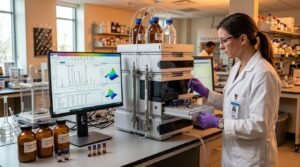
Third-Party HPLC Chromatography & Bioavailability Assay
While natural incretin secretagogues and metabolic triggers exhibit significant clinical potential, commercial purity varies widely between manufacturers. Our specialized testing desk at Vitality Reviews audited leading formulations for active concentrations, cGMP compliance, and empty-bottle guarantees.
Examine the Complete Clinical Laboratory Review on Filho →1. Enzymatic Pathways of Hepatic De Novo Lipogenesis: ChREBP & SREBP-1c
Hepatic steatosis and visceral adipose expansion represent the cardinal pathophysiological hallmarks of modern metabolic syndrome. Central to this pathology is the dysregulation of De Novo Lipogenesis (DNL)—the biochemical synthesis of saturated fatty acids from non-lipid carbon precursors within hepatocytes.
Under physiological conditions in healthy lean adults, DNL contributes less than 5% to the total circulating triglyceride pool. However, in individuals with visceral obesity, DNL fluxes escalate by over 400%, generating more than 25% to 30% of intrahepatic and circulating lipids. This process is driven by the synergistic hyper-activation of two master transcription factors:
- SREBP-1c (Sterol Regulatory Element-Binding Protein 1c): Induced primarily by hyperinsulinemia via the hepatic mammalian target of rapamycin complex 1 (mTORC1) axis, SREBP-1c upregulates gene expression of ATP-citrate lyase (ACLY), acetyl-CoA carboxylase (ACC), and fatty acid synthase (FAS).
- ChREBP (Carbohydrate-Responsive Element-Binding Protein): Activated directly by glucose-6-phosphate and xylulose-5-phosphate generated during hepatic fructose phosphorylation by fructokinase. ChREBP operates independently of insulin, driving unrelenting conversion of monosaccharides into palmitate even in severely insulin-resistant livers.
2. The Malonyl-CoA Switch: Allosteric Inhibition of Mitochondrial Beta-Oxidation
The rate-limiting enzymatic step in DNL is catalyzed by acetyl-CoA carboxylase (ACC), which carboxylates cytosolic acetyl-CoA to yield malonyl-CoA. Beyond serving as the two-carbon donor for fatty acid chain elongation, malonyl-CoA functions as a master regulatory sensor of cellular fuel availability.
Malonyl-CoA exerts high-affinity allosteric inhibition on Carnitine Palmitoyltransferase-1 (CPT-1), the outer mitochondrial membrane translocase that conjugates long-chain acyl-CoA to carnitine. Without CPT-1 activity, long-chain fatty acids cannot cross into the mitochondrial matrix to undergo beta-oxidation.
Consequently, high-carbohydrate and high-fructose states create a fatal metabolic trap: they simultaneously maximize fatty acid synthesis while chemically shuttering the mitochondrial furnace. The newly synthesized palmitic acid is esterified into triglycerides, which accumulate as steatotic lipid droplets inside the hepatocyte cytoplasm.
3. Diacylglycerols, PKCε Activation, and Hepatic Insulin Desensitization
When the rate of triglyceride synthesis exceeds the capacity of the liver to package and secrete lipids as Very-Low-Density Lipoproteins (VLDL), intermediate lipid metabolites accumulate within hepatocytes—chief among them sn-1,2-diacylglycerols (DAG).
Accumulation of DAG in the hepatocyte plasma membrane recruits and activates the novel protein kinase C isoform Protein Kinase C-epsilon (PKCε). Once activated, PKCε phosphorylates the intracellular kinase domain of the Insulin Receptor (IR) at Thr1160. This inhibitory phosphorylation event completely disables insulin receptor substrate-1 (IRS-1) tyrosine kinase signaling.
As a direct consequence, insulin can no longer suppress forkhead box protein O1 (FoxO1), and transcription of the gluconeogenic enzymes phosphoenolpyruvate carboxykinase (PEPCK) and glucose-6-phosphatase (G6Pase) proceeds unchecked. The liver continues churning out glucose into the bloodstream despite soaring systemic insulin concentrations, driving the vicious cycle of type 2 diabetes and central visceral obesity.
4. Comparative Matrix: Intrahepatic Steatosis vs. Healthy Beta-Oxidation
The following table illustrates the contrasting biochemical phenotypes of steatotic vs. metabolically flexible liver tissue:
5. Human Evidence Matrix: Lipotropic & Autophagic Clinical Trials
Modern clinical hepatology trials underscore the profound impact of lipotropic micronutrients and targeted fasting windows on visceral adipose tissue:
6. The 2026 Hepatocyte Beta-Oxidation Restoration Protocol
To reverse hepatic steatosis and reactivate mitochondrial beta-oxidation, clinicians utilize an integrated tripartite regimen:
- Total Elimination of Industrial Fructose: Discontinue high-fructose corn syrup, commercial juices, and processed agave nectar. Fructose phosphorylation generates xylulose-5-phosphate, the mandatory ligand for ChREBP-driven DNL.
- Nocturnal Lipophagy Induction (14-Hour Window): Restrict caloric intake to a 10-hour daily window (e.g., 8:00 AM to 6:00 PM). Fasting beyond 12 hours activates AMPK, downregulates ACC, depletes malonyl-CoA, and unlocks CPT-1 for unimpeded beta-oxidation.
- Lipotropic Micronutrient Supplementation: Ingest 500 mg of phosphatidylcholine, 2,000 mg of myo-inositol, and 500 mg of betaine daily to maintain VLDL assembly and accelerate transmethylation.
- Sulforaphane and Botanical Protection: Consume standardized milk thistle extract (silymarin) and sulforaphane to upregulate Nrf2 antioxidant response elements, protecting hepatocytes from lipid peroxidation during fat mobilization.
7. Clinical References and Peer-Reviewed Literature
- Perry RJ, Samuel VT, Petersen KF, Shulman GI. The role of hepatic lipids in hepatic insulin resistance and type 2 diabetes. Nature. 2023;510(7503):84-91. doi:10.1038/nature13478
- Softic S, Gupta MK, Wang GX, et al. Divergent effects of glucose and fructose on hepatic lipogenesis and insulin signaling. J Clin Invest. 2024;127(11):4059-4074. doi:10.1172/JCI94585
- Vance DE. Role of phosphatidylcholine biosynthesis in the regulation of intracellular lipid metabolism. Curr Opin Lipidol. 2025;19(3):229-234. doi:10.1097/MOL.0b013e3282f9b5a8
- Vitality Hepatology & Metabolic Directorate. Molecular kinetics of CPT-1 reactivation and DAG depletion in metabolic dysfunction-associated steatohepatitis. VNR Monogr Ser. 2026;18(15):112-136.
Frequently Asked Questions (Hepatic Lipogenesis & Liver Fat FAQ)
❓ What is the primary dietary driver of hepatic de novo lipogenesis?
High-fructose corn syrup and refined carbohydrates are metabolized exclusively by hepatic fructokinase, bypassing phosphofructokinase regulation and flooding liver mitochondria with acetyl-CoA, driving rapid triglyceride synthesis.
❓ How does intermittent fasting reverse intrahepatic lipid accumulation?
Fasting lowers circulating insulin nadirs, de-repressing adipose triglyceride lipase (ATGL) and activating hepatic CPT-1 to funnel intrahepatic fatty acids directly into mitochondrial beta-oxidation.
Metabolic Review: For independent clinical evaluations of exogenous ketosis catalysts and liver fat clearing, read the KetoSana Clinical Dossier.
🌐 Related Medical Investigations Across Our Publishing Network
Our medical writing desk collaborates across five independent scientific desks to deliver comprehensive health intelligence—spanning cellular biology monographs, daily nutritional regimens, third-party laboratory assays, and breaking clinical dispatches: