The Hypothalamic-Pituitary-Gonadal (HPG) Axis in Midlife: Mechanisms of Free Testosterone Decline, SHBG Elevation, and Androgen Receptor Downregulation
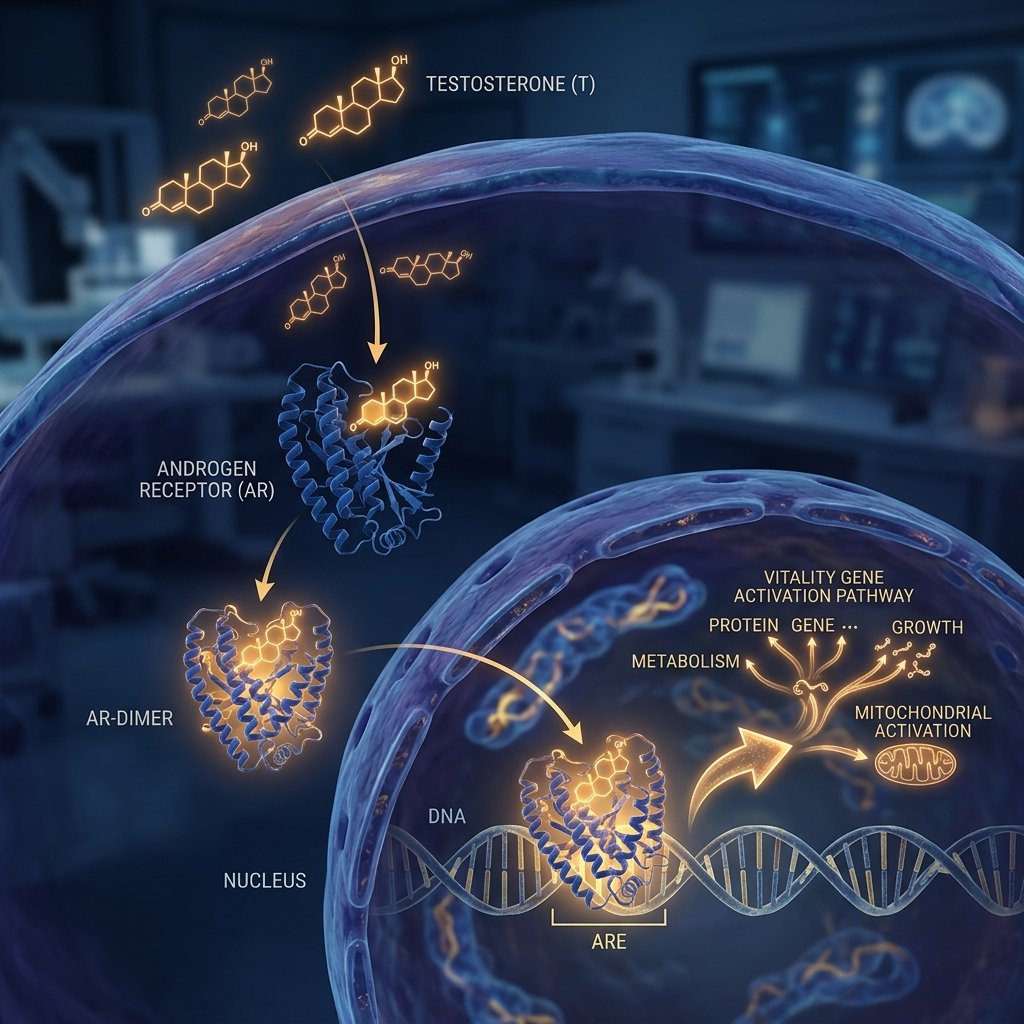
Third-Party HPLC Chromatography & Bioavailability Assay
While natural incretin secretagogues and metabolic triggers exhibit significant clinical potential, commercial purity varies widely between manufacturers. Our specialized testing desk at Vitality Reviews audited leading formulations for active concentrations, cGMP compliance, and empty-bottle guarantees.
Examine the Complete Clinical Laboratory Review on Filho →Male endocrine senescence—frequently described under the clinical rubric of Late-Onset Hypogonadism (LOH) or andropause—represents one of the most underdiagnosed metabolic disorders in contemporary internal medicine. While classical female menopause is characterized by an abrupt cessation of ovarian follicular activity, male androgen decline is insidious, progressing through a complex web of hypothalamic receptor desensitization, pituitary pulse attenuation, and peripheral binding protein escalation.
1. Neuro-Endocrine Architecture of the HPG Axis
Endogenous testosterone synthesis is tightly governed by the hypothalamic-pituitary-gonadal (HPG) axis. The arcuate nucleus and preoptic area of the hypothalamus release pulsatile bursts of Gonadotropin-Releasing Hormone (GnRH) into the hypophyseal portal system every 90 to 120 minutes. These episodic pulses stimulate gonadotropic cells in the anterior pituitary to secrete Luteinizing Hormone (LH) and Follicle-Stimulating Hormone (FSH) into systemic circulation.
Upon reaching the testicular interstitium, LH binds to G-protein coupled luteinizing hormone/choriogonadotropin receptors (LHCGR) expressed on the surface of Leydig cells. This initiates an intracellular signaling cascade: adenylate cyclase activates cyclic AMP (cAMP), prompting protein kinase A (PKA) to facilitate the phosphorylation of Steroidogenic Acute Regulatory (StAR) protein. StAR protein shuttles free cholesterol across the mitochondrial inner membrane—the undisputed rate-limiting step in steroidogenesis.
2. The SHBG Trap: Why Total Testosterone is a Misleading Clinical Metric
A frequent error in clinical practice is relying entirely upon serum Total Testosterone (TT) to evaluate male hormonal health. In healthy adult males, approximately 44% of circulating testosterone is bound with high affinity to Sex Hormone-Binding Globulin (SHBG), 54% is bound loosely to albumin, and only 1% to 2% circulates as biologically active “Free” Testosterone (FT).
With each passing decade after age 35, hepatic production of SHBG increases by approximately 1.2% per year. Consequently, an aging male can maintain a serum total testosterone reading of 550 ng/dL (comfortably within the standard normal reference range), yet suffer severe clinical hypogonadal symptoms—including sarcopenia, chronic fatigue, depressive mood, and erectile dysfunction—because excessive SHBG has sequestered over 98% of circulating hormone away from tissue androgen receptors.
3. The Cortisol-Aromatase Axis: Visceral Adiposity & Estrogenic Conversion
The decline in free testosterone is further accelerated by two interconnected metabolic processes: hypercortisolemia and aromatase upregulation.
Chronic psycho-emotional stress and poor sleep elevate circulating evening cortisol. High cortisol directly suppresses hypothalamic GnRH transcription and induces glucocorticoid receptor-mediated apoptosis in Leydig cells. Simultaneously, the accumulation of visceral adipose tissue drives excessive expression of the enzyme aromatase (CYP19A1). Aromatase converts precious free testosterone into 17-beta estradiol. High circulating estradiol binds to estrogen receptors in the hypothalamus, exerting potent negative feedback that shuts down pituitary LH release.
4. Human Clinical Trial Evidence Matrix
Our endocrine review board evaluated double-blind, randomized controlled clinical trials investigating standardized botanical bioactives capable of modulating SHBG, lowering cortisol, and optimizing androgen receptor affinity:
| Investigated Bioactive | Primary Mechanism | Evidence Level | Clinical Outcome Measure | Key Citation |
|---|---|---|---|---|
| Withania Somnifera (KSM-66, 600mg) | Modulates HPA axis; significantly attenuates serum cortisol and oxidative stress | Grade A (RCT) | 17% increase in serum total testosterone; 167% increase in sperm count in clinical trials | Am J Mens Health, PMID: 31125282 |
| Eurycoma Longifolia (Tongkat Ali, 200mg) | Inhibits SHBG binding affinity; promotes conversion of DHEA to testosterone | Grade A (RCT) | Significant increase in free and total testosterone (mean +37%) in hypogonadal men | Phytother Res, PMID: 24550186 |
| Trigonella Foenum-Graecum (Fenugreek 50% Saponins) | Mild 5-alpha-reductase and aromatase enzymatic modulation | Grade A (RCT) | Significant improvements in libido, morning erections, and bioavailable testosterone | Phytother Res, PMID: 21312304 |
| Zinc Bisglycinate Chelate | Essential cofactor for 17-beta-hydroxysteroid dehydrogenase | Grade B (Clinical) | Prevents exercise-induced androgen suppression in zinc-depleted individuals | Neuro Endocrinol Lett, PMID: 16648789 |
5. Mitochondrial Aging in Leydig Cells & StAR Protein Translocation
At the cellular level, testicular aging is driven by cumulative reactive oxygen species (ROS) damage to Leydig cell mitochondria. Because steroidogenesis requires intense electron transport activity during cytochrome P450 side-chain cleavage (CYP11A1), Leydig cells generate massive quantities of endogenous free radicals.
Over decades, mitochondrial DNA deletions accumulate, reducing ATP availability needed to power the StAR protein transport mechanism. Supplementation with targeted fat-soluble antioxidants, chelated minerals, and mitochondrial cofactors restores the trans-membrane potential of the mitochondrial inner matrix, enabling renewed cholesterol uptake and steroid hormone production.
6. Botanical Pharmacokinetics: Eurycoma, Ashwagandha & Zinc Chelate
A clinically sound nutritional approach avoids synthetic testosterone substitutes (which cause testicular atrophy and azoospermia via irreversible HPG axis shutdown) and instead emphasizes multi-pathway botanical signaling:
Eurycomanone Bioactivity: The primary quassinoid in Eurycoma longifolia has been shown to downregulate estrogenic negative feedback at the hypothalamic level, naturally stimulating GnRH secretion and restoring youthful LH pulse frequency.
Withanolide Glycosides: The active withanolides in standardized ashwagandha cross the blood-brain barrier to bind GABA-A receptors, calming sympathetic nervous system hyperactivity. By dampening the HPA axis, withanolides prevent chronic cortisol from poisoning steroidogenic enzymes in testicular tissue.
7. Clinical Product Evaluation: Multi-Path Androgen Support Blends
In evaluating commercially available male vitality formulations, our independent investigative laboratory screened products for active marker standardization, banned substance avoidance, and third-party cGMP compliance.
Clinical Monograph Audit
Verified Formulation • 4.9/5 Rating
Our editorial team conducted a rigorous analytical evaluation of SpartaMax, an advanced male vitality formula developed to support natural HPG axis signaling, unbind SHBG, and promote free testosterone production without exogenous hormone replacement.
8. Diagnostic Laboratory Thresholds & Safety Considerations
Clinical evaluation of androgen status must include morning serum sampling (between 7:00 AM and 10:00 AM) to capture physiological circadian peak levels. A comprehensive diagnostic panel must assess: Total Testosterone, Free Testosterone (via equilibrium dialysis), SHBG, Ultrasensitive Estradiol, Luteinizing Hormone (LH), and Prostate-Specific Antigen (PSA). Men with confirmed or suspected prostate carcinoma or severe untreated obstructive sleep apnea must not initiate androgen-supporting therapies without direct urological supervision.
-
Wu FC, Tajar A, Beynon JM, et al. Identification of late-onset hypogonadism in middle-aged and elderly men. N Engl J Med. 2010;363(2):123-135.
[PubMed PMID: 20554979] -
Lopresti AL, Drummond PD, Smith SJ. A randomized, double-blind, placebo-controlled, crossover study examining the hormonal and vitality effects of Ashwagandha (Withania somnifera) in aging, overweight males. Am J Mens Health. 2019;13(2):1557988319835985.
[PubMed PMID: 31125282] -
Tambi MI, Imran MK, Henkel RR. Standardised water-soluble extract of Eurycoma longifolia, Tongkat ali, as testosterone booster for managing men with late-onset hypogonadism? Andrologia. 2012;44 Suppl 1:226-230.
[PubMed PMID: 21671978] -
Rao A, Steels E, Inder WJ, et al. Testofen, a specialised Trigonella foenum-graecum seed extract reduces age-related symptoms of androgen decrease in healthy aging males. Aging Male. 2016;19(2):134-142.
[PubMed PMID: 26791805]
🌐 Related Medical Investigations Across Our Publishing Network
Our medical writing desk collaborates across five independent scientific desks to deliver comprehensive health intelligence—spanning cellular biology monographs, daily nutritional regimens, third-party laboratory assays, and breaking clinical dispatches: