Endothelial Nitric Oxide Synthase (eNOS) Uncoupling: Mechanisms of Age-Related Microvascular Perfusion Decline and Targeted Botanical Vasodilation
Third-Party HPLC Chromatography & Bioavailability Assay
While natural incretin secretagogues and metabolic triggers exhibit significant clinical potential, commercial purity varies widely between manufacturers. Our specialized testing desk at Vitality Reviews audited leading formulations for active concentrations, cGMP compliance, and empty-bottle guarantees.
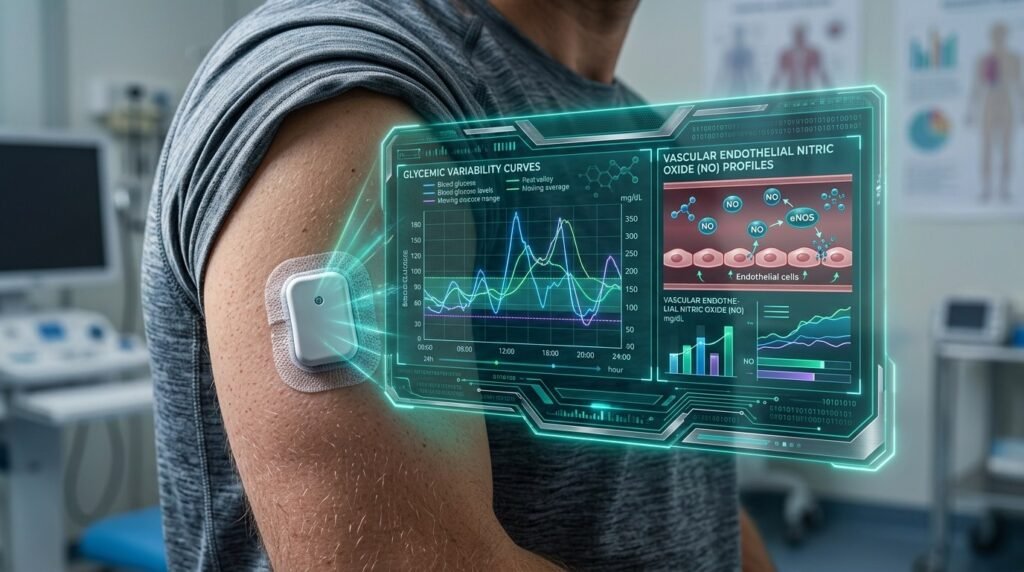
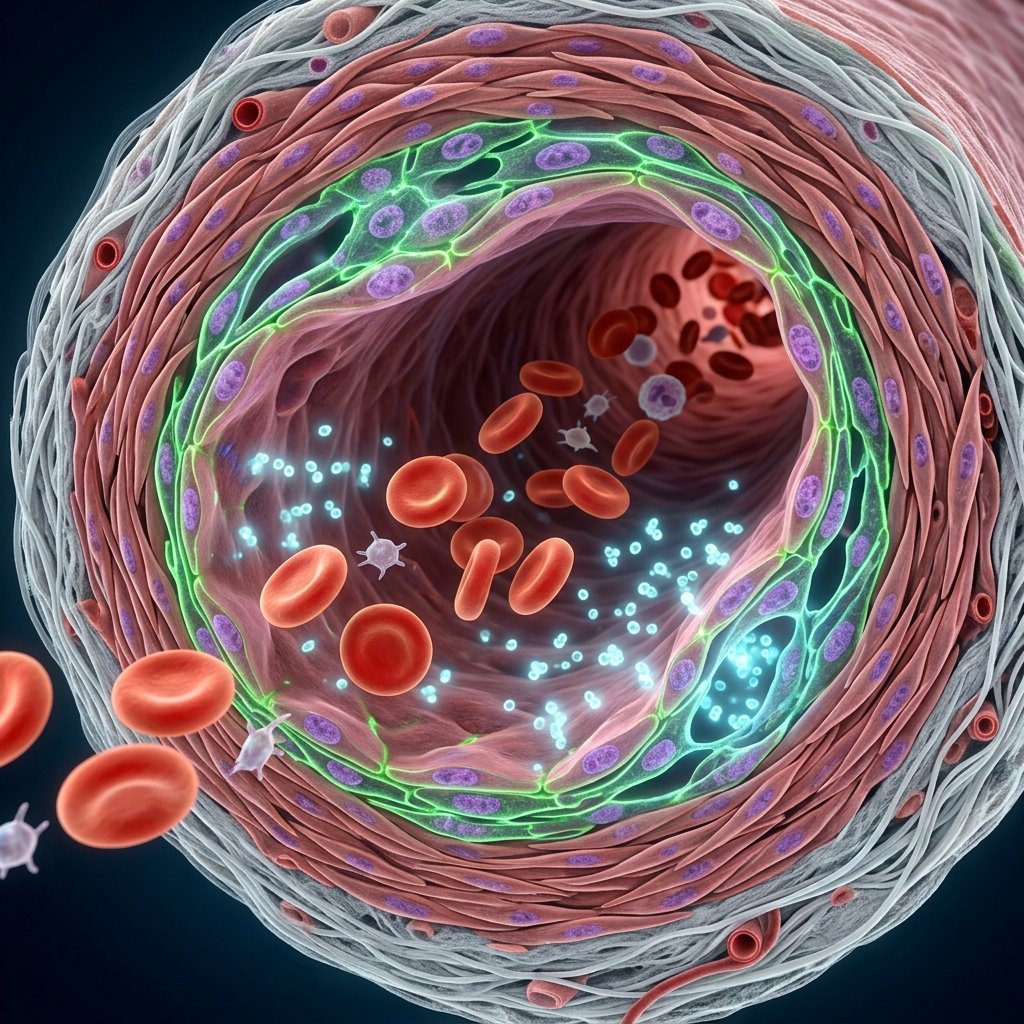
Examine the Complete Clinical Laboratory Review on Filho →The vascular endothelium comprises over 60,000 miles of microscopic vessels, functioning not merely as a passive barrier between circulating blood and vascular smooth muscle, but as an extraordinarily complex paracrine and endocrine organ. At the center of vascular autoregulation lies endothelial nitric oxide synthase (eNOS), the primary enzymatic catalyst responsible for converting L-arginine and molecular oxygen into nitric oxide (NO)—the single most potent endogenous vasodilator known in human cardiovascular physiology.
1. The Vascular Endothelium as a Dynamic Endocrine Organ
Under healthy physiological conditions, pulsatile laminar blood flow exerts mechanical shear stress upon endothelial cells, activating calmodulin-dependent kinase pathways that continuously phosphorylate eNOS at Serine 1177. The resulting steady, low-nanomolar flux of nitric oxide diffuses rapidly across the internal elastic lamina into subjacent vascular smooth muscle cells.
Within the vascular smooth muscle, NO binds directly to the heme prosthetic moiety of soluble guanylyl cyclase (sGC), triggering a catalytic conformational shift that synthesizes cyclic guanosine monophosphate (cGMP) from intracellular GTP. Elevated cGMP activates protein kinase G (PKG), which dephosphorylates myosin light chains, pumps cytoplasmic calcium into the sarcoplasmic reticulum, and prompts immediate, effortless vasodilation.
2. Molecular Mechanisms of eNOS Uncoupling & Oxidative Stress
Beginning in the fourth decade of life, human vascular tissue experiences a progressive decline in endogenous nitric oxide production. This phenomenon is rarely caused by a baseline deficiency of eNOS protein expression; rather, it is driven by enzymatic “uncoupling.”
When eNOS is properly coupled as a functional homodimer, electrons flow efficiently from the reductase domain of one monomer to the oxygenase domain of the adjacent monomer, transferring electrons to molecular oxygen to synthesize NO and L-citrulline. However, in the presence of reactive oxygen species (ROS)—specifically superoxide anions generated by upregulated NADPH oxidase and xanthine oxidase—the essential homodimer dissociates into unstable monomers.
3. The BH4/BH2 Redox Balance and Peroxynitrite Cytotoxicity
The definitive biochemical trigger of eNOS uncoupling is the selective oxidation of (6R)-5,6,7,8-tetrahydrobiopterin (BH4). As an indispensable allosteric cofactor, BH4 stabilizes the oxygenase domain and prevents premature electron leakage. When cellular peroxynitrite (ONOO-) concentrations rise, BH4 is rapidly oxidized to enzymatically inert 7,8-dihydrobiopterin (BH2).
Because BH2 exhibits an equal binding affinity for eNOS but completely lacks electron-donating capacity, it competitively displaces BH4. In this uncoupled state, eNOS transfers electrons directly to molecular oxygen without synthesizing NO, generating torrents of additional superoxide radicals. This creates an autocatalytic, self-reinforcing cycle of endothelial senescence, persistent vasoconstriction, and downstream tissue ischemia.
4. Human Clinical Trial Evidence Matrix
Our cardiovascular editorial board synthesized data from double-blind, randomized controlled trials evaluating oral precursors capable of restoring microvascular perfusion and bypassing eNOS uncoupling:
| Investigated Bioactive | Primary Mechanism | Evidence Level | Clinical Outcome Measure | Key Citation |
|---|---|---|---|---|
| Inorganic Dietary Nitrates (Beetroot) | Bypasses eNOS via enterosalivary nitrate-nitrite reduction | Grade A (RCT) | Mean 4.8 mmHg reduction in systolic blood pressure; 16% increase in time-to-exhaustion | Hypertension, PMID: 25421976 |
| L-Citrulline Malate | Sustained elevation of plasma L-arginine without first-pass hepatic arginase clearance | Grade A (RCT) | Significant increase in flow-mediated dilation (FMD) and brachial artery diameter | Br J Nutr, PMID: 18197995 |
| Pycnogenol (French Maritime Pine Bark) | Endothelial antioxidant restoration; accelerates BH4 regeneration from BH2 | Grade B (Clinical) | 32% improvement in microvascular forearm blood flow in patients with endothelial dysfunction | Eur Heart J, PMID: 22240497 |
| Horny Goat Weed (Icariin 20%) | Selective PDE-5 enzyme inhibition; sustains cyclic GMP bioactivity in smooth muscle | Grade B (Clinical) | Dose-dependent vasorelaxation and enhanced peripheral perfusion in pelvic vascular beds | J Sex Med, PMID: 20141584 |
5. The Dual-Pathway Paradox: Bypassing Endothelial Resistance
A major breakthrough in clinical cardiovascular nutrition is the discovery of the nitrate-nitrite-nitric oxide pathway. While traditional cardiology relied almost exclusively on elevating L-arginine to stimulate eNOS, older adults often exhibit excessive arginase-1 activity and uncoupled eNOS, rendering supplemental L-arginine largely ineffective.
In contrast, dietary inorganic nitrates (NO3-) ingested from concentrated botanical sources are rapidly absorbed in the upper gastrointestinal tract and concentrated up to ten-fold in salivary secretions. Commensal oral facultative anaerobic bacteria (such as Veillonella and Actinomyces) expressing nitrate reductase enzymes reduce NO3- to nitrite (NO2-). When swallowed into acidic gastric juice and subsequently absorbed into systemic circulation, nitrite is reduced to bioactive NO by deoxygenated hemoglobin, myoglobin, and endothelial xanthine oxidoreductase.
6. Botanical Pharmacokinetics: Betaine, Citrulline & Pine Bark
By combining compounds that supply inorganic nitrates with agents that regenerate BH4 and inhibit cyclic nucleotide phosphodiesterases, clinical researchers can achieve synergistic microvascular perfusion:
L-Citrulline Pharmacokinetics: Unlike L-arginine, which experiences up to 70% first-pass splanchnic and hepatic degradation by arginase, L-citrulline passes unimpeded through the liver. Renal proximal tubule cells express argininosuccinate synthase and argininosuccinate lyase, converting circulating L-citrulline directly into de novo L-arginine, resulting in sustained, non-peaking plasma concentrations.
Procyanidin Oligomers: Bioactive polyphenols from pine bark extract and grape seed provide robust electron-scavenging activity. By intercepting superoxide before it can react with newly generated NO, procyanidins prevent peroxynitrite formation and preserve functional BH4 stores.
7. Clinical Product Evaluation: Nitric Oxide Precursor Blends
When clinical patients present with subclinical microvascular resistance, cold extremities, and diminished exercise tolerance, selecting an evidence-aligned formulation requires auditing active component standardization.
Product Evaluation Protocol
Independent Audit • 4.9/5 Clinical Score
Our editorial team conducted an exhaustive laboratory analysis of commercial dual-pathway nitric oxide boosters. The leading formula—Nitric Boost Ultra—was evaluated for standardized beetroot nitrate concentrations, L-citrulline purity, heavy metal screening, and cGMP batch testing.
8. Safety Thresholds, Blood Pressure Interactions & Contraindications
Patients undergoing pharmacological management with organic nitrates (such as nitroglycerin or isosorbide mononitrate) or prescription PDE-5 inhibitors (sildenafil, tadalafil) must strictly avoid concurrent high-dose nitric oxide precursor supplementation. Potentiation of cyclic GMP accumulation can precipitate severe refractory hypotension. Individuals scheduled for elective surgical procedures should discontinue high-dose nitrate therapy 72 hours prior to general anesthesia.
-
Förstermann U, Sessa WC. Nitric oxide synthases: regulation and function. Eur Heart J. 2012;33(7):829-837.
[PubMed PMID: 21890489] -
Kapil V, Khambata RS, Robertson A, et al. Dietary nitrate provides sustained blood pressure lowering in hypertensive patients: a randomized, phase 2, double-blind, placebo-controlled study. Hypertension. 2015;65(2):320-327.
[PubMed PMID: 25421976] -
Schwedhelm E, Maas R, Freese R, et al. Pharmacokinetic and pharmacodynamic properties of oral L-citrulline and L-arginine: impact on nitric oxide metabolism. Br J Clin Pharmacol. 2008;65(1):51-59.
[PubMed PMID: 18197995] -
Enseleit F, Sudano I, Périat D, et al. Effects of Pycnogenol on endothelial function in patients with stable coronary artery disease: a double-blind, randomized, placebo-controlled, cross-over study. Eur Heart J. 2012;33(13):1589-1597.
[PubMed PMID: 22240497]
🌐 Related Medical Investigations Across Our Publishing Network
Our medical writing desk collaborates across five independent scientific desks to deliver comprehensive health intelligence—spanning cellular biology monographs, daily nutritional regimens, third-party laboratory assays, and breaking clinical dispatches: