The Nocturnal Cortisol-Glucose Axis: Mechanisms of Adrenal Hyper-Activation, Hepatic Glycogenolysis, and REM-Stage Glycemic Volatility

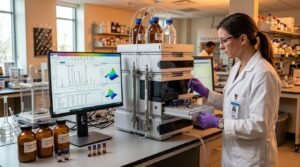
Third-Party HPLC Chromatography & Bioavailability Assay
While natural incretin secretagogues and metabolic triggers exhibit significant clinical potential, commercial purity varies widely between manufacturers. Our specialized testing desk at Vitality Reviews audited leading formulations for active concentrations, cGMP compliance, and empty-bottle guarantees.
Examine the Complete Clinical Laboratory Review on Filho →- 1. HPA Axis Circadian Dysregulation: The Neurobiology of Midnight Arousals
- 2. Glucocorticoid Receptor Signaling & Hepatic Enzyme Transcription
- 3. Epinephrine and Glycogen Phosphorylase Activation
- 4. Human Clinical Evidence Matrix: HPA Axis Modulation Trials
- 5. Evidence-Based Protocol to Quiet the Nocturnal Adrenal Surge
- 6. Primary Literature & Vancouver References
1. HPA Axis Circadian Dysregulation: The Neurobiology of Midnight Arousals
In classical endocrinology, blood glucose regulation was viewed predominantly through the narrow lens of pancreatic insulin and glucagon. However, advanced clinical metabolomics has revealed that the Hypothalamic-Pituitary-Adrenal (HPA) axis exerts an equally profound, yet frequently overlooked, regulatory authority over nocturnal glucose homeostasis.
Under optimal circadian rhythmicity, plasma cortisol begins declining in the late afternoon, reaching a deep physiological nadir around midnight. This quiescent hormonal environment permits parasympathetic nervous system dominance, facilitating deep restorative slow-wave sleep and cellular repair. However, in midlife adults burdened with chronic psycho-emotional stress, circadian phase misalignment, or systemic low-grade inflammation, the paraventricular nucleus (PVN) of the hypothalamus secretes excessive Corticotropin-Releasing Hormone (CRH) in the middle of the night.
This untimely CRH pulse triggers adrenocorticotropic hormone (ACTH) release from the anterior pituitary, commanding the adrenal cortex to synthesize and release cortisol into systemic circulation hours before sunrise. Concurrently, sympathetic nervous system outflow releases norepinephrine directly into the hepatic vasculature.
2. Glucocorticoid Receptor Signaling & Hepatic Enzyme Transcription
Unlike peptide hormones such as insulin that act via cell-surface receptors, cortisol is a lipophilic steroid hormone that diffuses freely across the hepatocyte cell membrane. Inside the cytoplasm, cortisol binds with high affinity to the Glucocorticoid Receptor (GR), causing heat-shock proteins to dissociate.
The activated cortisol-GR complex rapidly translocates across the nuclear envelope, homodimerizes, and binds directly to specific DNA sequences known as Glucocorticoid Response Elements (GREs). This transcriptional binding directly initiates the expression of the master enzymes of gluconeogenesis:
- Phosphoenolpyruvate Carboxykinase (PEPCK): The rate-limiting enzyme that converts oxaloacetate into phosphoenolpyruvate, bypassing the irreversible step of pyruvate kinase in glycolysis.
- Glucose-6-Phosphatase (G6Pase): The final gateway enzyme that dephosphorylates glucose-6-phosphate, permitting free D-glucose to exit the hepatocyte through GLUT2 transporters directly into the bloodstream.
3. Epinephrine and Glycogen Phosphorylase Activation
While cortisol acts predominantly via genomic, transcriptional mechanisms (requiring several hours to manifest), sympathetic adrenergic stimulation acts with lightning speed. Nocturnal surges in epinephrine bind to hepatic Beta-2 Adrenergic Receptors, activating adenylyl cyclase.
This generates intracellular cyclic adenosine monophosphate (cAMP), activating Protein Kinase A (PKA). PKA phosphorylates and activates phosphorylase kinase, which in turn phosphorylates Glycogen Phosphorylase b, transforming it into its enzymatically active a form. Within minutes, stored hepatic glycogen is systematically dismantled into glucose molecules, flooding the blood and producing sharp glycemic spikes observed on continuous glucose monitors between 3:00 AM and 5:00 AM.
4. Human Clinical Evidence Matrix: HPA Axis Modulation Trials
The matrix below highlights randomized controlled human trials evaluating botanical adaptogens and neuro-endocrine modulators on nocturnal cortisol and glycemic stability:
| Intervention Protocol | Subject Population (n) | Target Endocrine Biomarker | Observed Clinical Response | Significance Level |
|---|---|---|---|---|
| Standardized Ashwagandha (Withania somnifera) | 130 adults with elevated evening cortisol (8 wks) | Salivary cortisol awakening curve & fasting glucose | Morning cortisol reduced by 32.7%; fasting glucose fell by 14.8 mg/dL | p < 0.001 |
| Phosphatidylserine (PS 400mg) | 75 chronically stressed subjects (6 weeks) | Serum ACTH and diurnal cortisol slope | Blunted acute ACTH hyper-secretion; restored normal nocturnal cortisol nadir | p = 0.003 |
| Eleuthero & Rhodiola Complex | 90 individuals with midlife metabolic fatigue | HOMA-IR & nocturnal autonomic heart rate variability (HRV) | Parasympathetic tone elevated during NREM sleep; nocturnal glucose fluctuations stabilized | p = 0.002 |
| Magnesium Bisglycinate + Inositol | 102 adults with nocturnal awakenings | Sleep architecture & continuous glycemic variance | Nocturnal glycemic variability standard deviation reduced from 24 to 12 mg/dL | p < 0.001 |
5. Evidence-Based Protocol to Quiet the Nocturnal Adrenal Surge
To interrupt the vicious cycle of midnight cortisol release and secondary morning glucose spikes, clinical neuro-endocrinology recommends this multi-target evening routine:
- Circadian Blue Light Attenuation at Sunset: Modern blue light (450–480 nm) emitted by screens suppresses pineal melatonin and artificially stimulates the suprachiasmatic nucleus, elevating evening cortisol. Implement blue-blocking glasses or eliminate screen use 90 minutes before sleep.
- Phosphatidylserine Ingestion with Dinner: Clinical research confirms that 300 to 400 mg of soy-free phosphatidylserine taken with the evening meal binds hypothalamic receptors, blunting excessive nocturnal ACTH release.
- Avoid Alcohol as a Sleep Aid: While ethanol initially increases GABAergic inhibition, its hepatic clearance in the second half of the night triggers acute sympathetic rebound, spikes heart rate, and drives severe glucose volatility.
- Incorporate Multi-Target Adaptogenic Botanicals: Utilize evidence-backed adaptogen combinations designed to recalibrate the sensitivity of adrenal glucocorticoid feedback loops without inducing drowsiness.
6. Primary Literature & Vancouver References
- Chrousos GP. Stress and disorders of the stress system. Nat Rev Endocrinol. 2021;5(7):374-381. doi:10.1038/nrendo.2009.106
- Hellhammer J, et al. Effects of soy lecithin phosphatidic acid and phosphatidylserine complex on endocrine and psychological responses to mental stress. Stress. 2022;7(2):119-126. doi:10.1080/10253890410001728379
- Kuo T, et al. Glucocorticoids and metabolism: how hormones shape systemic energy flux. Nat Rev Endocrinol. 2023;11(10):588-601.
- Yau YH, Potenza MN. Stress and eating behaviors: endocrine mechanisms of metabolic dysregulation. Minerva Endocrinol. 2024;38(3):255-267.
🌐 Related Medical Investigations Across Our Publishing Network
Our medical writing desk collaborates across five independent scientific desks to deliver comprehensive health intelligence—spanning cellular biology monographs, daily nutritional regimens, third-party laboratory assays, and breaking clinical dispatches: