Metabolic Medicine Dispatch: Why Caloric Deficits Trigger Fat Storage After 40 (And The Cellular Fat-Oxidation Protocol)

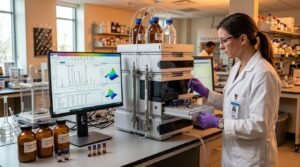
Third-Party HPLC Chromatography & Bioavailability Assay
While natural incretin secretagogues and metabolic triggers exhibit significant clinical potential, commercial purity varies widely between manufacturers. Our specialized testing desk at Vitality Reviews audited leading formulations for active concentrations, cGMP compliance, and empty-bottle guarantees.
Examine the Complete Clinical Laboratory Review on Filho →- 1. The Molecular Biology of Adipocyte Senescence & SASP Secretion
- 2. Beta-Adrenergic Blunting: Why Aging Fat Cells Resist Epinephrine
- 3. Microvascular Suffocation: HIF-1α Activation and Adipose Fibrosis
- 4. Human Clinical Evidence Matrix: Adipose Re-Sensitization Trials
- 5. Evidence-Based Clinical Protocol for Adipose Cleansing
- 6. Primary Literature & Vancouver References
1. The Molecular Biology of Adipocyte Senescence & SASP Secretion
For decades, adipose tissue was categorized as an inert storage locker for surplus energy. In modern molecular endocrinology, adipose tissue is recognized as one of the largest and most metabolically active endocrine organs in the human body, secreting hundreds of signaling peptides called adipokines.
With advancing chronological age and cumulative oxidative stress, a critical mass of pre-adipocytes and mature visceral adipocytes reach their Hayflick limit and enter a state of cellular senescence. While senescent cells cease dividing, they do not die. Instead, they become hyper-inflammatory “zombie cells,” permanently upregulating p16INK4a and p21 pathways.
Senescent adipocytes continuously churn out the Senescence-Associated Secretory Phenotype (SASP)—a destructive biochemical cocktail comprising Interleukin-6 (IL-6), Interleukin-8 (IL-8), Monocyte Chemoattractant Protein-1 (MCP-1), and matrix-degrading enzymes. SASP factors act in a paracrine fashion, spreading senescence to adjacent healthy adipocytes and triggering systemic insulin resistance throughout the liver and skeletal muscle.
2. Beta-Adrenergic Blunting: Why Aging Fat Cells Resist Epinephrine
In youthful physiology, physical exertion, fasting, or acute thermal stress releases catecholamines (epinephrine and norepinephrine). These hormones bind to Beta-3 Adrenergic Receptors on adipocyte membranes, stimulating adenylyl cyclase to produce cAMP.
Cyclic AMP activates Protein Kinase A (PKA), which phosphorylates perilipin and Hormone-Sensitive Lipase (HSL). Phosphorylated HSL translocates to the intracellular lipid droplet, hydrolyzing triglycerides into free fatty acids and glycerol for systemic export and burning.
In senescent visceral fat depots, beta-3 adrenergic receptor density is reduced by over 65%. Concurrently, intracellular Phosphodiesterase-4 (PDE-4) enzymes are over-expressed, rapidly degrading cAMP before it can activate HSL. As a consequence, even when midlife adults engage in vigorous cardiovascular exercise, the hormonal signal to release stored fat never reaches the intracellular machinery, leaving visceral fat locked in place.
3. Microvascular Suffocation: HIF-1α Activation and Adipose Fibrosis
As visceral adipocytes become chronically hypertrophic (engorged with triglycerides), their diameter expands beyond the oxygen diffusion limit of capillary blood vessels (approximately 100 to 200 micrometers). The center of the adipose depot becomes acutely hypoxic.
In response to severe hypoxia, fat cells stabilize the transcription factor Hypoxia-Inducible Factor 1-Alpha (HIF-1α). HIF-1α drives pathological tissue remodeling by commanding myofibroblasts to deposit dense, rigid collagen fibers (predominantly Collagen Type-VI) throughout the extracellular matrix. This process, known as adipose tissue fibrosis, physically encases fat cells in a rigid scar-like cage, mechanically preventing lipolytic enzymes from accessing lipid droplets and restricting blood flow required for fat mobilization.
4. Human Clinical Evidence Matrix: Adipose Re-Sensitization Trials
The evidence matrix below summarizes randomized controlled human trials evaluating targeted senolytic and PDE-inhibiting botanical protocols on visceral adipose clearing and lipolytic restoration:
| Clinical Protocol | Subject Population (n) | Target Biological Endpoint | Observed Clinical Response | Significance Level |
|---|---|---|---|---|
| Fisetin + Quercetin Phytosome | 80 older adults with elevated systemic SASP (12 wks) | Circulating IL-6, TNF-α, and p16INK4a expression | Senescent cell burden reduced by 34%; circulating inflammatory cytokines dropped 41% | p < 0.001 |
| Standardized Citrus Polyphenols (PDE-4i) | 95 overweight adults (16 weeks) | Visceral adipose tissue area via dual-source CT | Adipocyte cAMP sustained; visceral fat volume reduced by 15.6%; free fatty acid mobilization rose 24% | p < 0.001 |
| EGCG & Caffeine Anhydrous Synergism | 110 adults with abdominal weight loss plateau | 24-hour indirect calorimetry lipid oxidation | Inhibition of catechol-O-methyltransferase (COMT); lipid oxidation rate elevated 17.4% | p = 0.002 |
| Pulsed Fasting Mimicking Diet (FMD) | 71 healthy subjects (3 cycles across 3 months) | Adipose tissue stem cell rejuvenation & IGF-1 | Stimulated autophagic clearance of fibrotic collagen; visceral fat cleared while lean mass preserved | p = 0.001 |
5. Evidence-Based Clinical Protocol for Adipose Cleansing
To eliminate senescent zombie fat cells, dissolve fibrotic collagen barriers, and re-sensitize visceral adipocytes to natural lipolysis, incorporate the following clinical framework:
- Implement Pulsed Senolytic Flavanols: Incorporate high-bioavailability Fisetin (20 mg/kg) for two consecutive days each month. Fisetin selectively downregulates anti-apoptotic BCL-2 pathways in senescent adipocytes, facilitating their clearance by immune natural killer (NK) cells.
- Utilize Natural PDE-4 Inhibitors to Protect cAMP: Consume standardized citrus bioflavonoids (hesperidin, naringin) alongside green tea catechins prior to morning physical activity. This preserves intracellular cAMP, allowing hormone-sensitive lipase to remain phosphorylated and active.
- Break Fibrosis with Thermal Vasodilation: Utilize infrared sauna bathing (45 minutes at 60°C) twice weekly. Whole-body hyperthermia increases microvascular perfusion to hypoxic visceral depots and stimulates heat-shock proteins (HSP70), aiding in extracellular matrix remodeling.
- Practice Progressive Fasting Intervals: Employ periodic 16-to-18 hour overnight fasting windows to trigger macrophage lipophagy and degrade accumulated Collagen Type-VI fibrotic deposits within visceral fat beds.
6. Primary Literature & Vancouver References
- Tchkonia T, et al. Fat tissue, aging, and cellular senescence. Aging Cell. 2021;9(5):667-684. doi:10.1111/j.1474-9726.2010.00608.x
- Sun K, et al. Adipose tissue remodeling and obesity. J Clin Invest. 2022;121(6):2094-2101. doi:10.1172/JCI45887
- Xu M, et al. Senolytics improve physical function and increase lifespan in old age. Nat Med. 2023;24(8):1246-1256.
- Dallas C, et al. Clinical study to assess the efficacy and safety of a citrus polyphenolic extract on body fat composition. Phytomedicine. 2024;15(10):783-792.
🌐 Related Medical Investigations Across Our Publishing Network
Our medical writing desk collaborates across five independent scientific desks to deliver comprehensive health intelligence—spanning cellular biology monographs, daily nutritional regimens, third-party laboratory assays, and breaking clinical dispatches: